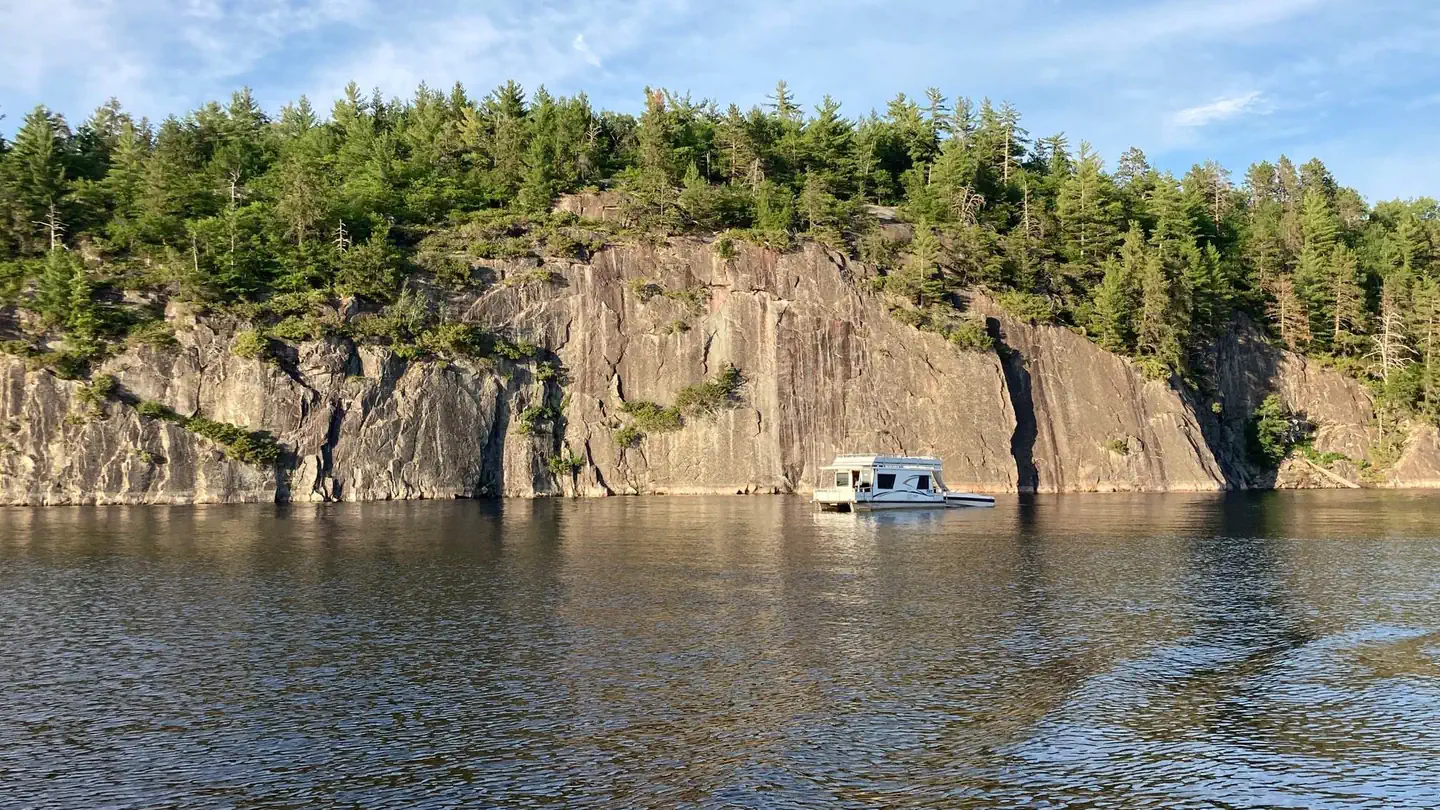
About Voyageurs National Park Houseboat Permits
Overview:Voyageurs National Park is a land and water environment of great beauty, exceptional natural and cultural resources, and abundant recreation opportunities. Located in the lake-country of northern Minnesota, the park protects 218,054 acres that include roughly 134,000 acres of forest, 84,000 acres of water, 655-miles of undeveloped shoreline, and hundreds of islands. The park's 55-mile northern boundary is the international border between the United States and Canada and includes an important segment of the "transcontinental highway" traversed by French-Canadian voyageurs during the late 1700s and early 1800s. The rocks tell the oldest story here. Lying in the southern portion of the Canadian Shield, the bedrock of Voyageurs National Park is 2.8 billion years old, some of the oldest exposed rock in the world. Younger rock formations do not appear here. Perhaps they never existed; but more likely a series of glaciers removed them. Those glaciers, more than a mile high, also scoured out the lake and river beds here and set the stage for vast forests. Voyageurs is unique among national parks as a place where the southern boreal forest meets and mixes with the northern hardwood forest. Wildlife thrives here. Voyageurs is one of only two national parks in the continental United States with an indigenous population of the Eastern Timber Wolf. Once visitors arrive at one of the park's four entry points, most of them leave their cars behind and set out by water, much as the Voyageurs did centuries ago. The park includes four major lakes - Rainy, Kabetogama, Namakan, and Sand Point, and twenty-six smaller inland lakes that together make up more than a third of the total park area. The smaller inland lakes are scattered throughout the park, but primarily on the Kabetogama Peninsula. The peninsula is Voyageurs' largest landmass and can be reached by water in summer or over the ice in winter. There are four distinct seasons in Voyageur country. The air is temperate duri